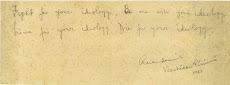
Baba
“There are some people who have the opinion that men are especially favoured by Parama Puruśa and that women are not; or that one man is equal to three women. This is dogma. These absurd ideas all originated in dogma. Any intelligent person can easily understand that these propositions are totally hollow and irrational. “The intellect of one man is equal to the intellect of three women” – it is a ridiculous statement. In reality, there may be some cases in which the intellect of one man may be equal only to that of two women. But then there may be other cases where the intellect of one woman may be equal to the intellect of twenty men. Such intelligent women can be found in the world. Or if we speak only of physical weight, then we may find some woman who weighs more than two men. Theoretical statements should not be accepted here.” (i)
Imagine a world where being beaten by bats
or stoned to death at a moment's notice
Let's face it. Very few non-Muslims have read the Quran. We're told in the West that Islam means peace. Ayaan Hirsi Ali, who grew up in Somalia, Saudi Arabia and Kenya within the Muslim faith, begs to differ. It means, she says, surrender. Surrender to the will of Allah. In reality, she says, it means submission - submission to willful ignorance and untold suffering of muslims everywhere the religion is practiced.
Ayaan did her best to become a good submissive muslim, but she refused to shut down her mind. She refused to submit her faculty of reason - the very thing that makes us human - to the written words of the Quran and the the trap of ignorance and destruction that she argues is the inevitable result.
She eventually stretched thin the chains of tribe and family and escaped to Holland, where she applied for and received refugee status. She educated herself, became a voice against the suffering of muslim women, and was elected to the Dutch parliament. Her courage and fire to help women escape the brutality imposed on them by Islamic tradition backed by the words of Allah forced her into years of hiding and security protection against threats on her life. The threats were real. When film-maker Theo van Gogh was murdered while riding his bicycle in the middle of the day, a note was found on his body, affixed with a knife, threatening her life, in the name of, and in honour of, Allah and Islam.
While reading this book, I couldn't but think of Anthony Burgess' A Clockwork Orange. But imagine that instead of living in a world of brutally sadistic and violent thugs and gangs that you may encounter if you are at the wrong place at the wrong time, that those sadistic thugs are your mother, father, brother, neighbours, teachers, and Imams. Imagine a world where being beaten by bats or stoned to death at a moment's notice and where you were supposed to submit and accept your beating was the norm. Imagine that to be a woman and to speak out against this outrageous behaviour is to commit a crime against Allah and the will of the Prophet Mohammad, dead for 1,500 years, to be avenged by the devout. This is a world where individual rights, reason, and justice are forbidden. All there is is the Quran, and if you are female, the assurance of a lifetime of submission, pain, suffering, and violence.
That is the story the Ayaan Hirsi Ali tells. It's her story as she lived it. It is the story, she says, of hundreds of millions of Muslim women, not only in Africa, but even in Holland and other Western countries.
Having suffered, escaped, and lifted herself out of the mental and cultural trap imposed by tribal culture, Ayaan describes her mission and responsibility as follows:
"Perhaps I could start by telling people that values matter. The values of my parents' world generate and preserve poverty and tyranny, for example, in their oppression of women. A clear look at this would be tremendously beneficial. In simple terms, for those of us who were brought up with Islam, if we face up to the terrible reality we are in, we can change our destiny."
This is change we can all help bring about by reading this book and supporting Ayaan in her fight to end the brutality Islam through reason and the injection of human values into the interpretation of the Quran. What Islam desperately needs is a cultural renaissance and a recognition of the concept of individual rights. If you are a lover of personal freedom and political liberty, and thereby a foe of human slavery and totalitarian brutality, Ayaan Hursi Ali's fight is a fight worth fighting. (ii)
REFERENCE
i. Ánanda Vacanámrtam Part 15, “Buddha o Aśt́áḿga Márga”
ii. Barry Linetsky (Ontario, Canada) This review is from: Infidel (Hardcover)
~ O' My Parama Purusa, If You Really Love Me Then Please ~"Bha'loba'so jadi tabe eso priyatam diiner e kut'iire..." (P.S. 2619)
Purport:
O' my dearmost Parama Purusa, if You really love me then please come to the hut of this lowly person. I want to make You listen to my love songs up to Your full heart's content; that's why in my mental viina I have practiced many tunes and melodies for You.
O my Lord, I do not have any knowledge or intellect. Nor do I have any virtue, name & fame, or the weight of those things. I have only one thing: Love for You in my mind. My whole heart is completely filled with love for You. And by offering that love I will satisfy You, by Your grace.
O’ Parama Purusa, O’ Baba, I do not have any prestige, nor do I get any respect or honour. None of these do I have. Nor do I have such devotion that I feel my ego getting wounded by Your not coming. Baba, I have only gratitude in my heart for all those things which You have graciously bestowed upon me. Please shower me in Your ahetuki krpa - causeless grace.
Baba, I know in my heart that You love me, but if You really love me then please come close in my heart. For You I have prepared and decorated my mind in Guru cakra. Baba, please grace me by coming in my meditation...
Paranoia of old age & AM
Namaskar,
Traditionally in the West and wherever materialism reigns, old-age is looked upon as something bad; whereas in the various Eastern traditions, old-age is seen as something venerable. Often we see this as a stark dichotomy; even then, the distinction is not so clear-cut.
For instance, in the Western nations, in many fields, the experience that comes with being a senior person is highly valued. In various arenas, age and the accompanying life experience are embraced as great qualities and characteristics. In those arenas, the wisdom, experience, decision-making, and contemplative abilities of seasoned veterans and aged professionals are respected.
For the most part, it is primarily the pseudo-culture film and beauty industries that place such a tremendous emphasis on skin, youthfulness, and superficial beauty. In those enterprises, experience and mental capabilities are not valued. So this is the dichotomy that exists in many places: Some arenas of life value old-age and others not.
In Ananda Marga, those who have lived into their senior years and old-age have much to offer to society. Their values, manner of thinking, and life experiences bring forth a wealth of knowledge and insight. That is why Baba has directed that the senior persons should oversee collective functions and play a leading role in various aspects of our social life.
Besieged by allurement of superficial beauty:
shine their face, paint their nails, and pretty themselves
One of the key reasons for addressing this topic—i.e. value of old age—is because so many are living the lie of materialism. In materialism, superficial beauty is everything. With this message being sounded throughout the commercial avenues, the common people have succumbed to this outlook.
Knowingly or unknowingly, common citizens want to look young and verily older adults are trying to compete with teenagers in this regard. This has led young adults, middle-aged adults, and older adults to get cosmetic / plastic surgery. They change their shape and form, and use so many cosmetic products to shine their face, paint their nails, and pretty themselves. They are sunk in the notion that their superficial beauty defines who they are.
In that way, they overlook their inherent psychic strengths and life experiences and waste their money and time in cosmetic beauty. Alas, they become depressed realising they will never be 18 again. This is the sad state of affairs wherever materialism has come into play.
Some Wts are involved in dyeing their hair
Shockingly, this same debased outlook has spilled over into our Ananda Marga as some of our very own wholetimer Dadas and Didis have made the mad dash towards cosmetic charm. Instead of honing their practice and engagement in Sixteen Points, some of our Wts are involved in dyeing their hair, colouring themselves, and participating in all kinds of beauty parlor treatments.
Baba clearly guides us to shape the mind in a spiritual manner, yet certain wholetimers are plunged in materialistic beauty pursuits. These workers are supposed to be the guiding light of humanity—yet see how they have become trolls of materialism. This gives a sense of the outrageous allurement of materialism and superficial beauty—even our monks and nuns have gotten affected. For more about this WT beauty competition, read the letter (link) appended at the bottom of this email.
We should not underestimate the force of materialism that it even had the power to swallow many of our Wts. In that case, how will general members of society withstand the onslaught of materialism.
That is why it is our duty to rise above keeping the mind fixed on Him and be an example to others—otherwise how will they ever be able to escape the rough seas of materialism.
Old age: see world as temporary
As one ages, they realise that this life is transient and that a person will not live forever. They see their friends pass, money come and go, and so many changes. By this way, their feeling that this world is impermanent multiplies as they age. Naturally that brings forth a more spiritual vision because the only option left is to seek out that which is permanent.
In their youth, most could not conceive of the idea that they will one day die; they did not consider their own mortality. Rather as youths, one took great risks and did daredevil things, thinking that they are indestructible etc.
But as one ages the psychology changes and people are forced to think about the ephemeral nature of this created world. Everything is temporary. One is forced to more deeply consider what is beyond their own unit existence. So that is another benefit of aging.
And this sort of psycho-spiritual approach is heightened when one is suffering from a grave disease. Then, they are faced with the prospect of their own death in a more direct manner. This leads them to consider and / or strengthen their connection with the divine world.
A distinct quality that arises within aged people is a more spiritual outlook. That does not mean that all older people are more spiritual than younger ones. Rather, within the context of one's own life, their spiritual outlook often heightens with age.
The value of experience
Here we can say that one of the main benefits of having lived on this earth for a longer period is experience. Experience is that great teacher. People learn from their own life interactions, as well as from the stories and tales of those around them. This builds a mature and valuable outlook.
Although in old age the body may have started its path of moderate degeneration or worse, one's brain and thinking capacity, in many cases, can remain extremely sharp and pointed far into the later years. So in those arenas where success depends more upon the psychic realm, then aged persons are better equipped for the job.
That is why we see in many fields people taking on huge responsibilities in their later years—and they are respected and honoured for their work and contributions.
Nobody looks forward to growing old, and often people think that aging just means futility. But in Ananda Marga—and in various communities where one's mental prowess is respected—one's advanced age brings a wealth of knowledge and experience. By this way, they are in proper position to guide others as well as adopt a holistic spiritual outlook.
Victims of the shallow thinking of materialism
We can say that experience is one key characteristic that accompanies aging. Such experience is invaluable. Those who are born will one day die; yet in that process of aging, people gain many positive attributions and useful qualities.
Typically speaking, people are very scared of growing old. But one need not be scared or worried. Old age is not just wrought with diminishing abilities and deteriorating faculties etc. Rather, as one gradually ages, they continue to grow and develop—their outlook becomes more mature based on their accumulated life experiences.
So those who think that people become decrepit and useless in old age are naive; such persons are victims of the shallow thinking of materialism.
Importance of elderly in Ananda Marga
In our Ananda Marga, great importance and tremendous respect is given to senior persons based on their life experiences and long-term endeavour. Here are a few of the many ways in which this occurs:
Ananda Marga philosophy states, "In absence of the ácárya the ceremonies can be conducted by the senior man present. The presence of the ácárya is desirable since he enjoys considerable esteem. Ácárya is also more conversant. He combines esteem with efficiency." (1)
Ananda Marga philosophy teaches us, "Plant the tree while mentally reciting guru mantra. Then while pouring some water on the tree, everyone will recite the following with the ácárya/á or a senior person leading." (2)
Ananda Marga philosophy states, "All the social festivities are parts of Brahma sádhaná. It is meaningless to wait in expectation of the ácárya. For this reason alone, it has been laid down that an elderly man can conduct the function in absence of the ácárya. The potentialities of vested interest persist if things are reserved in the hands of a particular group." (3)
Here following are further important teachings from Sadguru Baba.
Namaskar,
In Him,
Brahmananda
Let people live for a hundred years or more
Ananda Marga philosophy states, "Many people are under the wrong impression that perhaps the people in ancient times lived long lives. In my opinion this idea is not very correct. Had it been so, then why is it maintained in the shloka, “you should aspire to live a hundred years”. It is not true that many people lived a hundred years. Then only the lifespan of a hundred years was considered to be something covetable. In fact the people would not lived very long years. Life in those days was full of struggles. A gorilla in a wild environment lives about 22 years. If it is brought to a zoo and provided with good food and if it is kept free from any worries and anxieties then the gorilla may live about 28-29 years. Life in a zoo is comparatively safe – free from worries of wild life. Life in ancient days was not in the least carefree. It was full of struggles and dangers. There were struggles amongst human beings, between human beings and animals, and between animals. So human life was rather short-lived. Now the average longevity of human being is on the increase. People of those days would bless the juniors – “Shata sharadaḿ jiiva” – Live a hundred autumns. That shows that the lifespan of a hundred years was not usually the longevity of an average person. “Shata sharadaḿ jiiva,” “Shatáyurbhava” [“Live a hundred years”]."
"Let people live for a hundred years or more and engage themselves in noble deeds."
Nányathe tehasti na karma lipyate nare.
"If a person wishes to live a hundred years for the promotion of human welfare his life will really be a meaningful existence. Such a person will never fall into the bondages of reaction, because all of his actions are intended for public welfare."
"Thus if people continue to perform deeds for public welfare then they will be able to avert the bondages of action. They will not be required to be reborn in a world to reap the consequences of their actions. Good deeds produce good reactions and bad deeds produce bad reactions. To reap the good reaction and bad reaction they will not be required to come to this world, if they perform deeds with the sole intention of public welfare and not any other intention. Then they can avoid being trapped into bondages of actions. Then the welfare of others brought about by his deeds will be considered a reward for his deeds. This is the life of a real person – a righteous person. This is the reason for which human beings have come to this world." (4)
Story: "only cobblers in your assembly"
must see deeper value not just superficial image
~ Courtesy of Yahoo Question & Answers ~
Looking to Ashtavakra's deformed body, the guards of King Janaka were amused. Ashtavakra retorted, “Do not judge a person by his appearance and age, judge him by what he knows. Inform your king that there is a person ready to challenge the great minister Bandhi.” The king came and was surprised to see a small deformed boy. He asked a few questions and was greatly impressed by his knowledge. King Janak soon arranged for the debate with Bandhi. The Pundits and philosophers, all burst into laughter on seeing the queer form of “Ashtavakra”. The boy (Ashtavakra) too reciprocated with a burst of laughter but in a loud way. Everybody got enraged. King Janaka asked the boy “Why you are laughing young man?. To this “Ashta vakra” said, “Oh King! I thought you called Vidwans and Pundits to assemble here but I find only “cobblers” in your assembly. " They roared, “How dare you call us ‘cobblers”. Then the boy Ashtavakra calmly replied, “You all laughed at the twisted form of my body which is akin to leather. Only those who work with leather is conversant and they evaluate leather. Hence, there is nothing wrong in my calling you all as ‘cobblers”. Janaka saw reason in the argument of the boy. Everybody who assembled there hung their head in shame. Hence we should never criticise any based on their outer form. To everyone’s surprise Ashtavakara defeated Bandhi in no time and secured his father and others. This is the message as i already showed in my answer: ””Do not judge a person by his appearance and age, judge him by what he knows””
Courtesy of http ://in.answers.yahoodotcom/question/index?d= 20120524205446AATo24s
Like a waiting room of a railway station
Ananda Marga philosophy states, You should remember always that you have come here for a short span. You won't remain in this world for a long period. You may remain here, say, for ninety or a hundred years, or say for 150 years. Some saints like Traelauṋga Svámii lived here for 350 years. He lived in Varanasi in India and died in this twentieth century. But you are to live under certain limitations – limitations of time, space and person."
"So you should always remember that you have come here for a very short span. It is just like a waiting room of a railway station. You remain there for a short period and when the train comes, you leave the waiting room. This world is just like that waiting room. You are to remain here for a very short span."
"You should always remember this fact – “I have come here for a short span and I won't remain here for a very long period. My home is elsewhere. I am just like a tourist.” You should always remember this fact. And as a universal tourist, you, while leaving for your permanent home, will not require a passport." (5)
As long as I exist I will live a glorious life
Sadguru Baba guides us, There is a common notion that people in ancient times lived longer than the people of today; but this is incorrect. Rather due to scientific progress and advances in medical science, as well as spiritual progress in Tantra Yoga, modern humans are living longer lives than the ancients. People in the olden days hardly lived longer than forty-five years; but today people live much longer. To live a life of one hundred years was a rare accomplishment in those days. And thus the sage said, “Human beings may pray to God for a long life of one hundred years – in order to perform noble deeds” (otherwise why should they drag on their existences unnecessarily?). In the present-day world, there are a few people who have passed the age of one hundred, but not very many..."
"But although the human beings of today may live even longer than that, mere survival is not enough; what is important is to live a dignified life. The excellence of human life lies in action; it is through action that human beings survive. They should aspire to live long while performing noble deeds; it is futile to live just like an earthworm. Indeed, each and every human being should vow, “I do not know how long I will survive; but as long as I exist I will live a glorious life, not an ignominious existence like that of an earthworm.”"
"Human beings have to earn their livelihood and perform their assigned duties. The degree of physical labour they have to perform depends on the economic condition of their land. The citizens of those countries which are socio-economically developed have to perform less physical labour; instead their intellectual labour has increased. This is the natural law. The human beings who lived one hundred years ago used to perform much more manual labour than do those of today. Those who washed clothes used to stand in knee-deep water. This type of life for years on end markedly reduced their longevity, and thus washermen and women did not live longer than forty to forty-five years; their excessive physical labour would shatter their health. Due to their lack of knowledge of hygiene and absence of spiritual practice, their life-spans were shortened."
"Spiritual practice makes the mind calm and quiet, and maintains the nerves in a state of equipoise; and thus spiritual practice increases longevity. Those Vaishnavites who are vegetarians, who regularly sing spiritual songs, do meditation, perform virtuous deeds and think pure thoughts, live longer than ninety years."
"Now, one may say that some people like Vivekananda did not live long; but the cause of their early death was excessive labour. Extreme physical labour definitely reduces one's longevity. Chaitanya Mahaprabhu lived [less than fifty] years; he could perhaps have lived longer, but due to excessive labour, he could not survive. He undertook long tours throughout India on foot. Shankaracharya did not live long, either, because he also toured India on foot; he walked from Cape Comorin to the Himalayas. This extreme physical labour told upon his health; otherwise he could perhaps have lived longer."
"I want you all to live long – but you must live glorious lives, not like those of earthworms. Your lives should be bustling with activity."
Ananda Marga ideology says, "Human beings always yearn for the destruction of the evil forces, for the removal of darkness and the flooding of effulgent light. Let your dynamic forward movement make your lives ever joyful – see that you never lag behind, or slump down dejected. No human being wants this. Rather let your slogan always be, Caraeveti, caraeveti [“Move on, move on”]. Let the chant of your forward movement be ever on your lips." (6)
Work even while dying
Ananda Marga ideology states, "Why do you want to live for a hundred years? To do more and more work. You want to live long because you hope to do more and more work in this life – being goaded by this desire, you wish to live a long life. So in the psychic sphere one must always remember that one has a mission in life, and just to materialize that life, for proper practication of that mission, one is to remain in this world; otherwise one must not remain here, one should retire from life as early as possible."
"Once I said, “It is good to die working, but still better to work even while dying.” So one should always bear in mind, “I am alive in this world for the fulfilment of my mission. This is the reason I am eating, dressing, sleeping. Apart from this, I have no worth.” And if one ever lives a life without a mission, then in that case, no endeavour in the psychic sphere will bring success. If you do not want to work, if you do not want to serve the world, you will become a burden on the world. It would be better to leave the world than to live as a burden on it. Human life should be enriched with intense activity...."
"Why do you undertake a mission? Átmamokśarthaḿ jagaddhitáya ca [“For Self-realization and for the welfare of the universe”]. You certainly undertake it in order to promote the welfare of the world. Along with this you have to take up another mission, and that is to bring about your own spiritual salvation. If one does not try for one's own salvation, if one does not do spiritual practice, one can never serve society. It will be totally impossible. When you take a vow to work for your mission, just remembering that vow will not make it possible for you to win salvation, though through that vow you can serve the world." (7)
Only here for a very short span
Ananda Marga ideology guides us , "Human life, you know, is a measured one. Human beings come here for a very short span. If during this short span one tries to go through all the scriptures it will take more than one thousand years? And one is only here for approximately one hundred years. So, going along the path of jinána is a mere waste of existence. And karma is infinite and the human structure is a finite one, with limited stamina and limited capacity. So the path of bhakti is not only harmless, but the wisest one and is the approach of the most blessed people. So my advice to you all is to move along the path of bhakti. It is the best route." (8)
Death is imminent—work sincerely & vigorously
Grhiitvaeva kesheśu mrtyurńá Dharmácaret
Ananda Marga ideology states, "That is, during dharma'caran, i.e. dharmic pursuits [following yama and niyama, service, svadhyaya etc] one should think that the god of death has already started pulling one’s hair – that one’s death is imminent. And accordingly one should work sincerely and vigorously; one will have to do a great many noble deeds within a short period." (9)
References
1. Tattvika Diipika, part 5
2. Caryacarya - 1, Tree-Planting Ceremony
3. Tattvika Diipika, part 5
4. Ananda Marga Karma Yoga, “Kurvanneveha Karmmáńi”
5. Ananda Vacanamrtam - 12, Puńya All Twenty-Four Hours
6. Ananda Vacanamrtam - 33, You Must Live Glorious Lives
7. Subhasita Samgraha - 24 Incantation and Human Progress
8. Ananda Vacanamrtam - 6, Bhakti Is the Best
9. Subhasita Samgraha, part 11
== Section 2 ==
The sections below demarcated by asterisks is an entirely different topic,
completely unrelated to the above material. It stands on its own as a point of interest.
The sections below demarcated by asterisks is an entirely different topic,
completely unrelated to the above material. It stands on its own as a point of interest.
******************************************
One Man Is Equal To The Intellect Of
Three Women?
“There are some people who have the opinion that men are especially favoured by Parama Puruśa and that women are not; or that one man is equal to three women. This is dogma. These absurd ideas all originated in dogma. Any intelligent person can easily understand that these propositions are totally hollow and irrational. “The intellect of one man is equal to the intellect of three women” – it is a ridiculous statement. In reality, there may be some cases in which the intellect of one man may be equal only to that of two women. But then there may be other cases where the intellect of one woman may be equal to the intellect of twenty men. Such intelligent women can be found in the world. Or if we speak only of physical weight, then we may find some woman who weighs more than two men. Theoretical statements should not be accepted here.” (i)
This following comment is somewhat related with
the above issue.
Imagine a world where being beaten by bats
or stoned to death at a moment's notice
courtesy of Amazon.com
Let's face it. Very few non-Muslims have read the Quran. We're told in the West that Islam means peace. Ayaan Hirsi Ali, who grew up in Somalia, Saudi Arabia and Kenya within the Muslim faith, begs to differ. It means, she says, surrender. Surrender to the will of Allah. In reality, she says, it means submission - submission to willful ignorance and untold suffering of muslims everywhere the religion is practiced.
Ayaan did her best to become a good submissive muslim, but she refused to shut down her mind. She refused to submit her faculty of reason - the very thing that makes us human - to the written words of the Quran and the the trap of ignorance and destruction that she argues is the inevitable result.
She eventually stretched thin the chains of tribe and family and escaped to Holland, where she applied for and received refugee status. She educated herself, became a voice against the suffering of muslim women, and was elected to the Dutch parliament. Her courage and fire to help women escape the brutality imposed on them by Islamic tradition backed by the words of Allah forced her into years of hiding and security protection against threats on her life. The threats were real. When film-maker Theo van Gogh was murdered while riding his bicycle in the middle of the day, a note was found on his body, affixed with a knife, threatening her life, in the name of, and in honour of, Allah and Islam.
While reading this book, I couldn't but think of Anthony Burgess' A Clockwork Orange. But imagine that instead of living in a world of brutally sadistic and violent thugs and gangs that you may encounter if you are at the wrong place at the wrong time, that those sadistic thugs are your mother, father, brother, neighbours, teachers, and Imams. Imagine a world where being beaten by bats or stoned to death at a moment's notice and where you were supposed to submit and accept your beating was the norm. Imagine that to be a woman and to speak out against this outrageous behaviour is to commit a crime against Allah and the will of the Prophet Mohammad, dead for 1,500 years, to be avenged by the devout. This is a world where individual rights, reason, and justice are forbidden. All there is is the Quran, and if you are female, the assurance of a lifetime of submission, pain, suffering, and violence.
That is the story the Ayaan Hirsi Ali tells. It's her story as she lived it. It is the story, she says, of hundreds of millions of Muslim women, not only in Africa, but even in Holland and other Western countries.
Having suffered, escaped, and lifted herself out of the mental and cultural trap imposed by tribal culture, Ayaan describes her mission and responsibility as follows:
"Perhaps I could start by telling people that values matter. The values of my parents' world generate and preserve poverty and tyranny, for example, in their oppression of women. A clear look at this would be tremendously beneficial. In simple terms, for those of us who were brought up with Islam, if we face up to the terrible reality we are in, we can change our destiny."
This is change we can all help bring about by reading this book and supporting Ayaan in her fight to end the brutality Islam through reason and the injection of human values into the interpretation of the Quran. What Islam desperately needs is a cultural renaissance and a recognition of the concept of individual rights. If you are a lover of personal freedom and political liberty, and thereby a foe of human slavery and totalitarian brutality, Ayaan Hursi Ali's fight is a fight worth fighting. (ii)
REFERENCE
i. Ánanda Vacanámrtam Part 15, “Buddha o Aśt́áḿga Márga”
ii. Barry Linetsky (Ontario, Canada) This review is from: Infidel (Hardcover)
******************************************
== Section 3 ==
~ O' My Parama Purusa, If You Really Love Me Then Please ~"Bha'loba'so jadi tabe eso priyatam diiner e kut'iire..." (P.S. 2619)
Purport:
O' my dearmost Parama Purusa, if You really love me then please come to the hut of this lowly person. I want to make You listen to my love songs up to Your full heart's content; that's why in my mental viina I have practiced many tunes and melodies for You.
O my Lord, I do not have any knowledge or intellect. Nor do I have any virtue, name & fame, or the weight of those things. I have only one thing: Love for You in my mind. My whole heart is completely filled with love for You. And by offering that love I will satisfy You, by Your grace.
O’ Parama Purusa, O’ Baba, I do not have any prestige, nor do I get any respect or honour. None of these do I have. Nor do I have such devotion that I feel my ego getting wounded by Your not coming. Baba, I have only gratitude in my heart for all those things which You have graciously bestowed upon me. Please shower me in Your ahetuki krpa - causeless grace.
Baba, I know in my heart that You love me, but if You really love me then please come close in my heart. For You I have prepared and decorated my mind in Guru cakra. Baba, please grace me by coming in my meditation...
== Section 4
==
Links
Links
Here is the letter how some Wts are using
beauty cosmetics to look young etc
http://anandamarganewsbulletin.blogspot.com/2014/04/dadas-didis-beauty-competition.html
Read below for important news about AMPS
http://anandamarganewsbulletin.blogspot.com/2015/01/three-types-of-wts-proper-bad-worst.html
http://anandamarganewsbulletin.blogspot.com/2015/01/misuse-of-forgiveness-3-more.html
Read below for important news about AMPS
http://anandamarganewsbulletin.blogspot.com/2015/01/three-types-of-wts-proper-bad-worst.html
http://anandamarganewsbulletin.blogspot.com/2015/01/misuse-of-forgiveness-3-more.html
This email contains four sections:1. PS #2619: O' My Parama Purusa, If You Really Love Me Then Please
2. Posting: Fear Of Old Age
3. End Quote: One Man Is Equal To The Intellect Of Three Women?
4. Links